Preparing for LVT
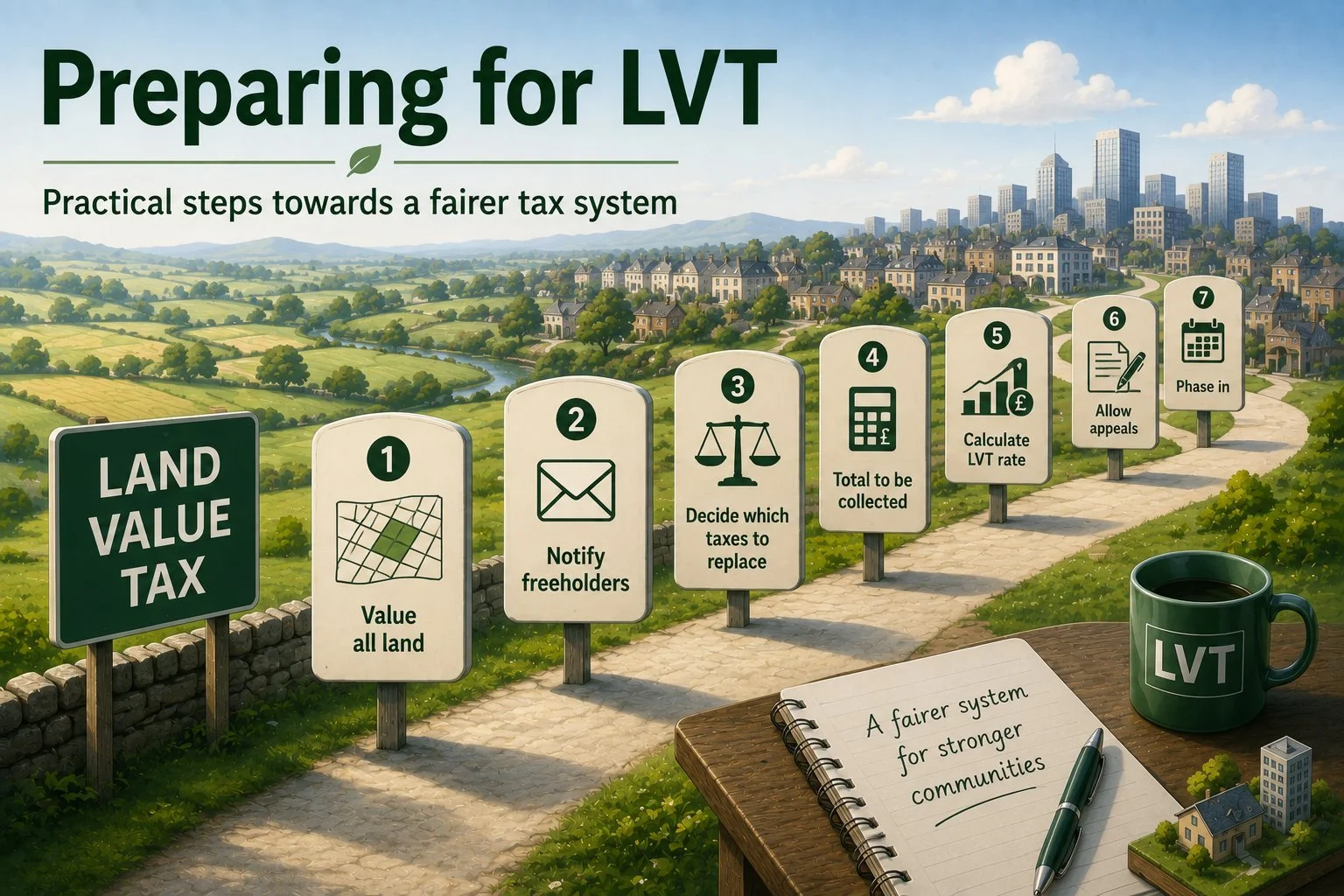
No legislation is required to prepare for the introduction of LVT – it can be done now.
Speculation and guessing are pointless when it is straightforward to gather the facts before a final decision is taken about introducing LVT,
In the two years before LVT begins to be phased in (over 10 years) we need to know:
Which taxes it will replace.
How much it needs to collect
Details of all freeholders.
The value of all freeholds.
Best ways to mitigate the impact
How appeals will be handled.
Once we know the amount to be collected and the value of all freeholds we can establish the standard LVT percentage rate that will apply across the country.
At this point legislation can be introduced to begin the phasing in of LVT.
Which taxes it will replace
LVT is not a new tax, it will replace existing “bad” taxes – the sort that fall more heavily on those with lower incomes (these are called “regressive” taxes) than those with higher incomes (these are called “progressive” taxes).
Council Tax is hated, regressive and unfair – a three bedroom house in Gateshead pays twice as much as a mansion in Westminster.
Stamp Duty is hated – it is a very significant cost when buying a first home or when moving home. It is based on thresholds which distort the market – prices tend to be just below a threshold. People think if it as a once-only tax but it’s a transaction tax which applies every time a property changes hands.
Business Rates are complex and full of exceptions (loopholes) - a whole. industry has grown up to advise businesses on how to minimise them.
One proposal is to scrap all property taxes and replace them with LVT.
However, LVT could replace all or part of any tax – that is a political decision.
How much it needs to collect
It has to collect at least as much as the taxes it replaces. LVT will be collected nationally and used to provide 100% of the funds Local Authorities (LAs) need to meet their legal obligations.
LAs have had a 40% real term cut in their funding since we had to bail out the banks from the financial crash they caused in 2007/2008.
With the agreement of their local voters LAs can add a supplement to the LVT rate to cover things they are not legally required to provide. This could be capital investments (sports centres etc.) or periodic costs (concerts, festivals etc.) They could also be used to discourage things the LA does not want: holiday lets, second homes, airbnbs etc. Supplements will be collected nationally but returned in full to the LA.
Property details
Local Authorities (296 of them in England) know details of all properties paying Council Tax or Business Rates in their area.
This data will be transferred to HMRC so freeholders (see below) will receive a single bill showing Council Tax and LVT due for each property they own. During the phasing in period the Council Tax will fall and the LVT will rise.
Details of all freeholders
The Land Registry currently holds details of about 90% of freeholds in the country. The remaining 10% (which includes land under infrastructure etc.) has to be added and details of all freeholders must be validated before they can be used for LVT.
Note: all the data held by the Land Registry is public.
Please see the article “The Land Registry”.
Cadastral parcels
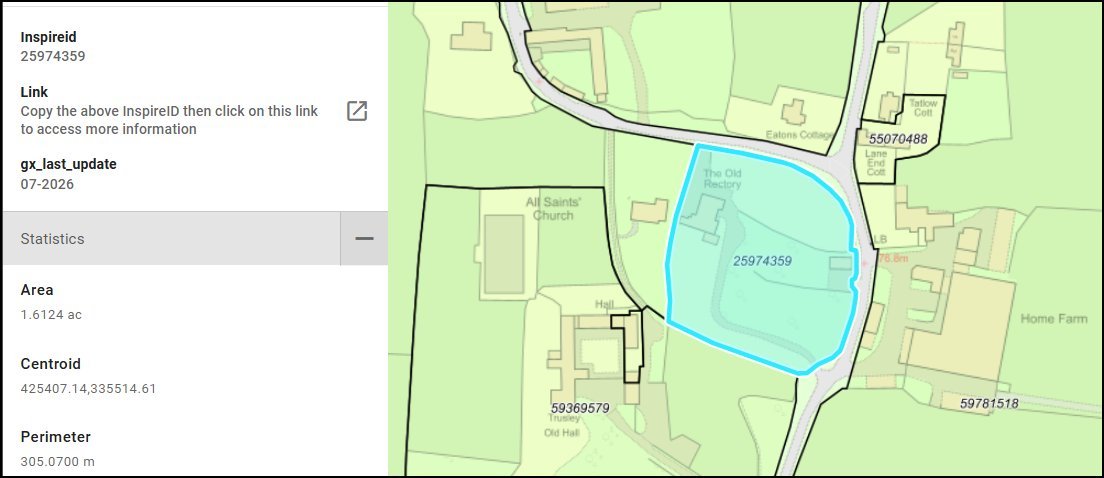
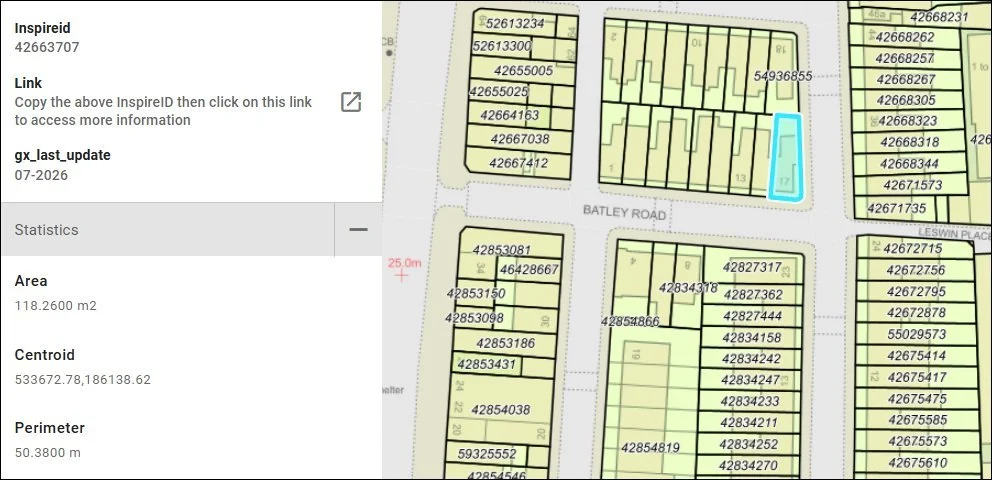
The Land Registry makes its data available so maps can show “cadastral parcels”. Each parcel shows the boundaries along with a link of a freehold title held by the Land Registry.
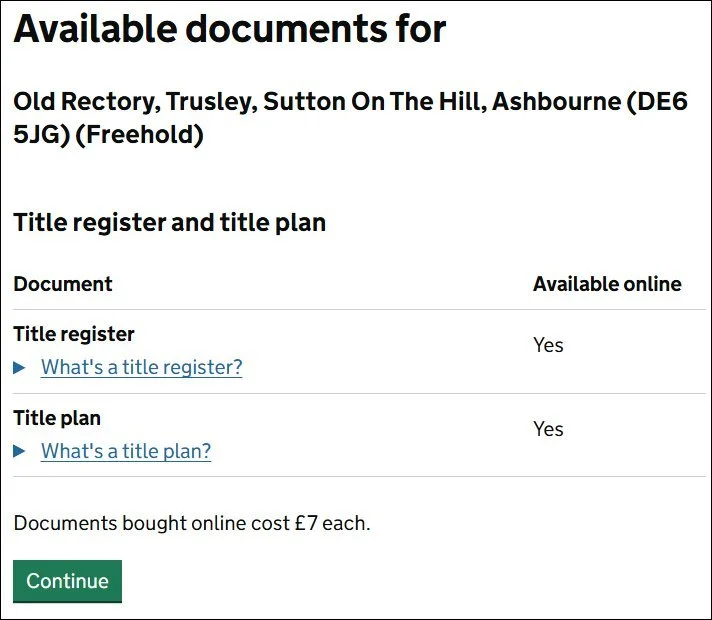
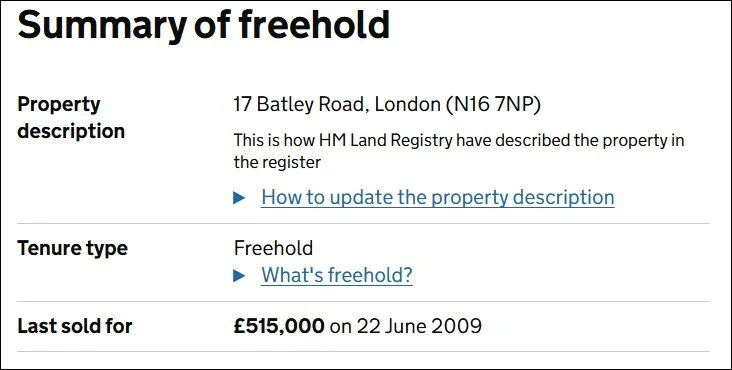
The first example below shows a cadastral parcel in the tiny rural Derbyshire village of Trusley which has only 11 dwellings and 10 adult residents (August, 2026). The “Inspirid” shown links directly to a summary of the title held by the Land Registry which, at the moment, makes a charge to obtain a full copy of the title showing freeholder(s) etc.
The second example is an urban area – Batley Road in Hackney.
The value of all freeholds
The Valuation Office Agency (VOA), part of HMRC, will provide an assessment of the land value associated with every freehold.
Like Council Tax and Land Registry data, assessments will be public and will be available online free of charge.
Best ways to mitigate the impact
The preparation period for LVT will look at its impact on different regions.
Parts of the country, particularly in London and the South East, have much higher land values than elsewhere – simply because supply does not match demand and more people wish to live there and are willing to pay more.
It is recognised that those in more expensive areas of the country will pay more in LVT – this balances things out, rectifies some of the unfairness of the current system and helps to reduce the North/South divide.
However, most people living in such areas are not “wealthy”, they are normal people doing normal jobs, so it would not be fair to dump a sudden increase on them.
For the introduction of LVT the following are proposed:
Phasing-in over 10 years allows people and the market to adjust.
Those who genuinely cannot afford to pay any increase in LVT over Council Tax will be able to defer payment of the difference until the property is sold or transferred.
Initially there may be two LVT rates – a lower rate for primary residences (homes) and the standard rate for everything else.
The lower rate will increase year-on-year during the phasing-in period until it reaches the standard rate when phasing-in is complete.
LVT is a replacement tax, not a new one, so those taxes it replaces will be phased out as LVT is phased in.
To qualify for the lower rate:
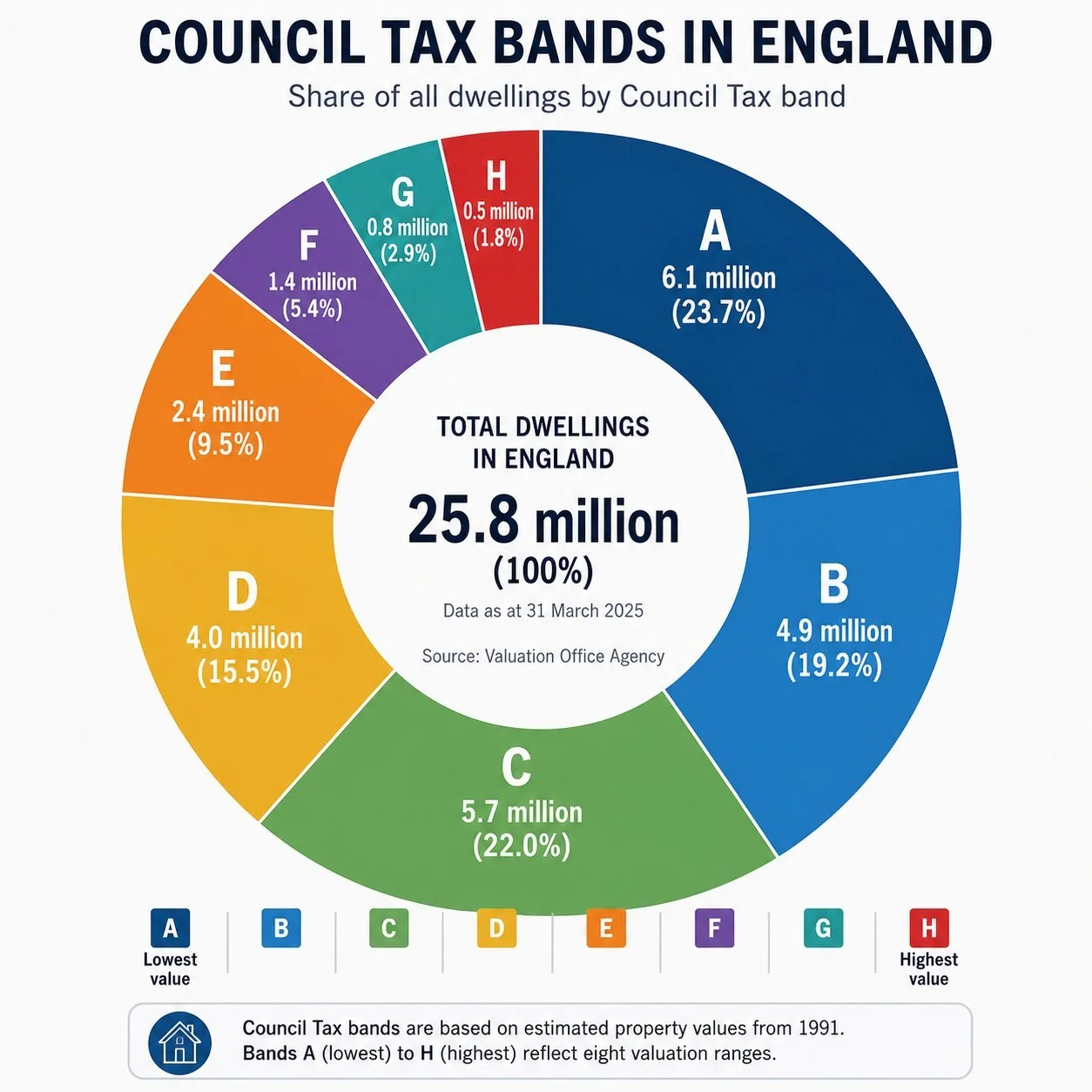
At the time LVT is introduced the property must be in Council Tax band A, B, C or D.
All the freeholder(s) listed by the Land Registry must be named individual UK citizens living in the UK and registered with HMRC for tax purposes.
The property must be the primary residence of all the freeholders.
Any single freeholder may have only one primary residence.
For clarity: property held by companies (Limited, PLC, Community Interest, Limited by Guarantee, etc.), Limited Liability Partnerships (LLP), Charitable Incorporated Organisations, the Official Custodian for Charities, Registered Societies, Housing Associations, trusts, overseas entities or any other legal entity which is not a named individual UK citizen will not qualify for the lower rate.
How appeals will be handled
The appeals process is straightforward:
The Valuation Office Agency (VOA) will supply each freeholder with an assessment of the value of each land title they hold.
Freeholders will have three months to lodge an appeal. Appeals are made onine.
The Valuation Tribunal web site will provide a list of registered RICS (Royal Institute of Chartered Surveyors) land valuers.
Freeholders can submit valuations from two independent RICS land valuers explaining why their valuations are lower than the VOA assessment.. This is done online.
The Valuation Tribunal may decide to accept the higher of the two valuations and arrange for the VOA to supply a revised assessment to the freeholder.
The Valuation Tribunal may decide to carry out an investigation and will notify the freeholder of the outcome.
It will be a criminal offence to fraudulently attempt to reduce the LVT assessment. Any RICS surveyor involved in such a fraud will be struck off and may be subject to further criminal prosecution.